
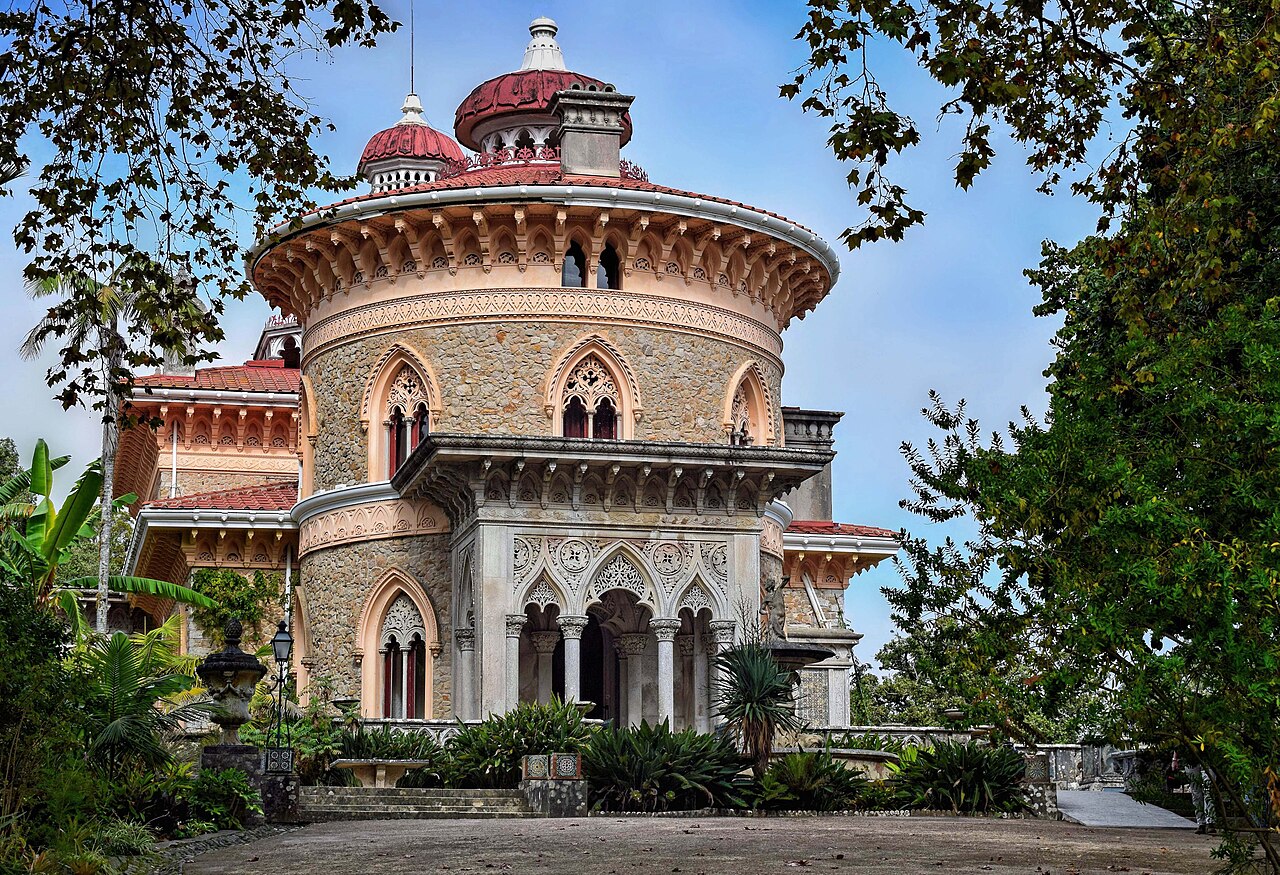
Monserrate Palace
Architecture and botany meet in one of Sintra’s most delicate Romantic settings.
A place told
through its history.
Monserrate’s story begins in 1540 with a hermitage dedicated to Our Lady of Monserrate. After the 1755 earthquake, Gerard de Visme built a Neo-Gothic castle here, and William Beckford restored the estate from 1794.
Francis Cook acquired the property in 1863 and commissioned the present palace, combining Gothic, Indian and Moorish influences. Plant motifs visually connect its interiors with the surrounding gardens.
Species from across the world were arranged into distinct landscapes. The Portuguese state bought the estate in 1949, and a long restoration campaign eventually reopened the restored palace to visitors.
Monserrate seems to belong to another part of the world. Its palace, with Gothic, Indian and Moorish influences, is surrounded by one of Sintra’s most extraordinary gardens.
Here, nature takes centre stage. Winding paths cross lush vegetation, where species from across the world meet the hills’ native woodland. Palms, tree ferns, bamboo, camellias, azaleas and other plants create very different settings along the way.
The palace itself seems to have grown from the landscape. Its corridors, arches and decorative details create an almost cinematic atmosphere, while the garden invites you to slow down and enjoy the quiet.
Monserrate may be one of the finest examples of how architecture and nature in Sintra complement each other.
Details that stay
with you.
A short gallery dedicated to this place in Sintra.
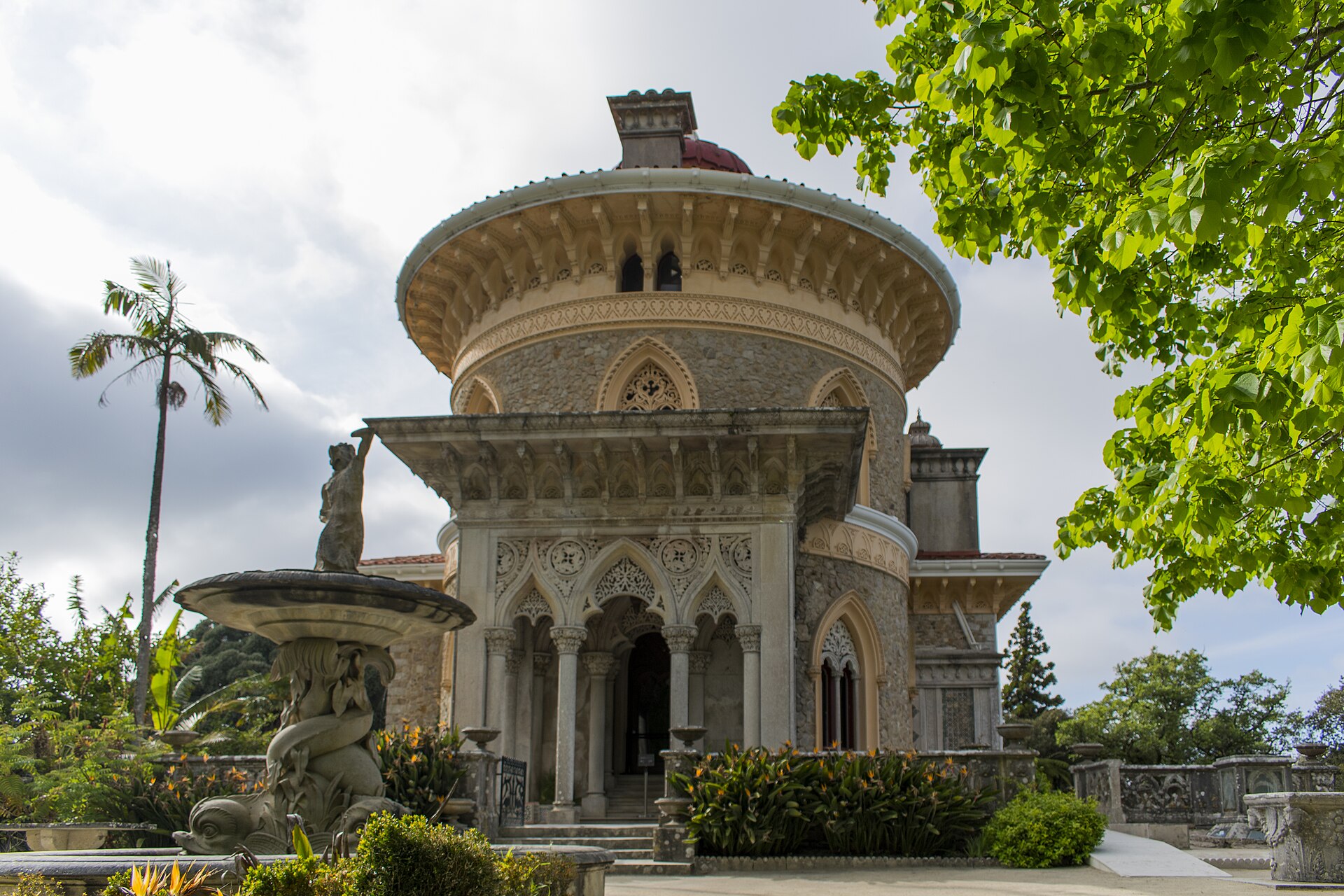
Monserrate Palace by Jocelyn Erskine-Kellie · CC BY-SA 2.0 · resized and cropped for display
Palácio Monserrate (1) by Jorge Lobo · CC BY-SA 4.0 · resized and cropped for display


Would you like this place on your route?
Tell us your idea and confirm the possible stops with your guide.
Request a quote